
Assessments
A Pupil-Centred Whole School Approach to Assessment
“The beauty of children is in their adaptation; we must nurture their spirit and never put limits on their potential; the plan we have for them may be the very thing that limits them. Never forget they are whole as they are, we are the ones that have to learn to listen differently.” (Dana Hall)
Assessment Documents
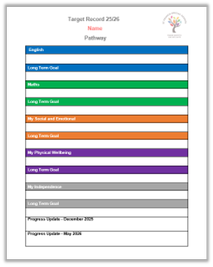
Target Records
Pupils are set targets across all areas of need. Long term goals are agreed with parents and in line with the EHCP. Targets are functional, meaningful and appropriate to the needs of each individual pupil and these are shared regularly with parents
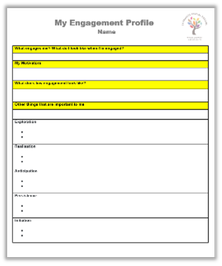
Engagement Profile
In addition to a target record, some pupils will have an engagement profile. These provide all professionals with information, enabling them to meet pupil needs holistically- which helps to ensure effective and meaningful engagement and participation. Detailed knowledge of a pupil is vital to ensure a personalised approach.
Seesaw

Seesaw is used as an online learning platform to showcase the learning and progress of each individual pupil. Observations related to a pupils’ Target Record are documented on their individual journals. Teachers reflect upon observations to inform future planning.
Seesaw allows parents to work very closely with the class team to share and discuss approaches and aspirations, establishing a supportive partnership.
Timetables and Provision
Each class has a bespoke timetable in place which is structured to meet the needs of all pupils. Although sessions are outlined on the timetable, every pupil’s access is personalised. Timetables are dynamic and flexible and are regularly reviewed and discussed. The structure of the timetable allows for dedicated time to carry out therapies and individualised support programmes.
Standardisation
Teachers meet twice per year to reflect on pupil journeys over time. In these meetings, we discuss pupil progress and whether this is on target, exceeding expectations or requiring further support as well as discussing the impact of the curriculum and the pupils’ engagement within the sessions offered. As part of these meetings, teachers will identify curriculum areas where additional support is required. As a team, strategies and changes to approaches are discussed within the meeting and documented on the pupil’s journey. Teachers work collaboratively to problem solve and provide the necessary support to their pupils.
Pupil Progress Review
Professional discussions take place twice per year with teachers. The progress of individuals is discussed. Support and interventions are identified in addition to challenging teachers to consider ambitious next steps when pupils are exceeding their targets.
Ongoing discussions around pupil engagement and motivation are encouraged within class teams and with the curriculum lead to continually improve classroom practice.
NCFE Accreditation
Entry Level Certificate in Essential English and Maths in Everyday Life
The qualification is part of a suite of qualifications that build on knowledge and skills from Entry Level 1 through to Level 2. It will support learners with any identified skills gaps in English and Maths and has been designed using the Functional Skills subject content to develop essential skills for everyday life and support progression to Functional Skills. Th certificate is assessed through a portfolio approach.
Entry Level Functional Skills Qualification in Maths and English
Pupils following a Semi-Formal/Formal curriculum pathway will access the NCFE Qualification in Functional Skills for both English and Maths. The Functional Skills qualifications empower learners with essential skills for real-world application, employment, and further education. They instil confidence and proficiency in each subject area, providing a solid foundation for success. The course is delivered through a combination of coursework and external examinations. The Maths lessons are practical with a focus on real-life problems, teaching the students’ skills that they need to be successful in life.
Internal Verification of NCFE Portfolio and Entry Level Examinations
Internal verification meetings take place for learners who access the NCFE accreditation in English and Maths. This process is to mark, scrutinise and bring rigour to the portfolios and assessments prior to submitting to the NCFE examination board for external quality review. This moderation takes place with other experienced teachers, delivering the specifications in Semi-Formal and Upper School. Portfolios and Entry Level (EL1-EL3) examination paperwork go through rigorous internal verification procedures, to ensure learner achievement can be awarded. Students following NCFE qualifications at Level 1 or Level 2, are all externally marked and verified by the awarding body.